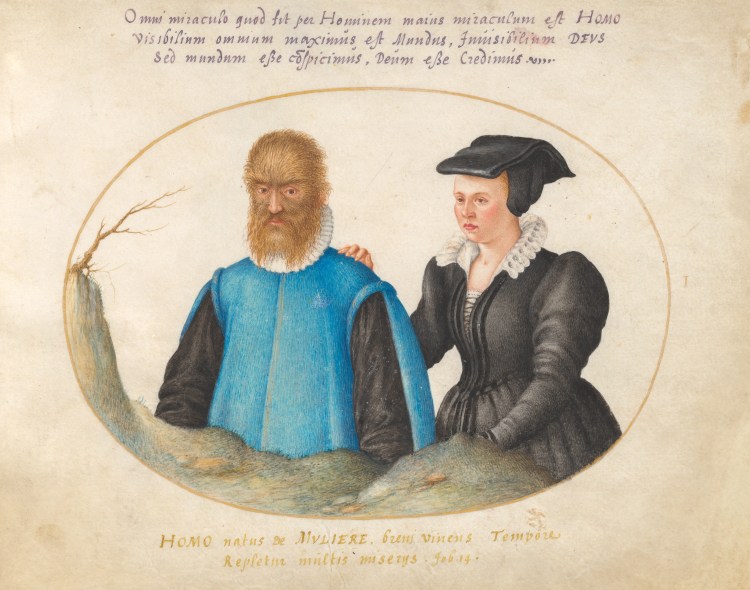
The sideshow was a place where people could see all kinds of rare disorders and deformities on display. From achondroplasia to microcephaly to neurofibromatosis, all kinds of conditions were present, albeit with less technical names for the performers (dwarves, pinheads, and knotty men respectively). One disorder was unique in that it produced two different kinds of sideshow performers, both incredibly valuable, but diversely marketed: hypertrichosis. Hypertrichosis is a disorder characterized most generally by excessive or unusual hair growth. There are five types of hypertrichosis, but for this article, we’re mainly focused on two: congenital hypertrichosis terminalis (CHT) and hirsutism. CHT is also known as “werewolf syndrome” and gave the sideshow their hairiest performers, like lion faced men and dog faced boys. Hirsutism only affects women and is the condition that gives bearded ladies their beards. We’re going to discuss CHT first.
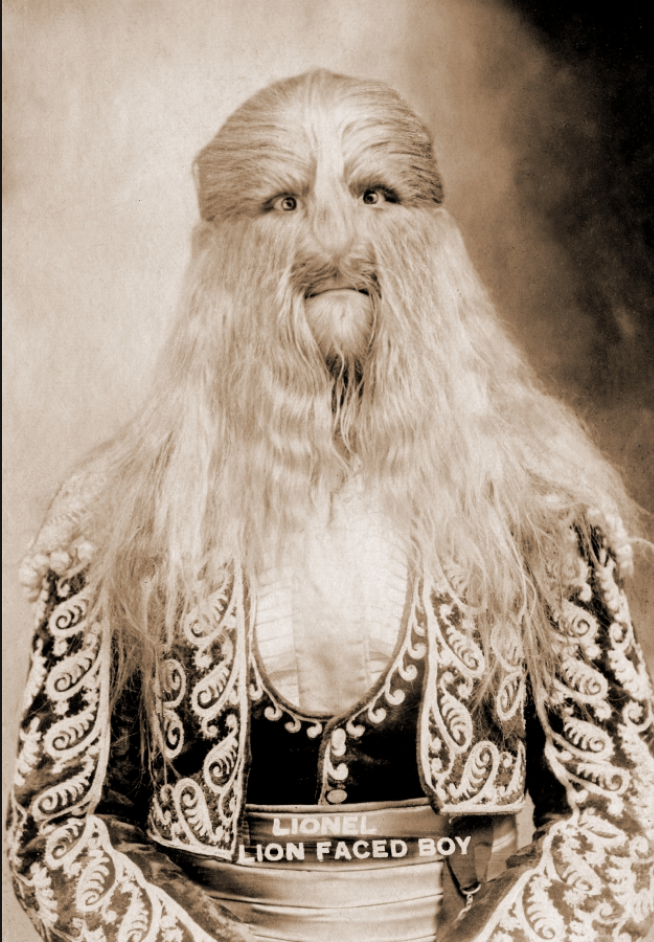
CHT is a genetic disorder caused by a contiguous gene deletion. If you recall my last blog post, you may remember that before the causes of disorders like these were discovered, it was thought that a shock to a pregnant woman affected how the baby would look after being born (Hence why Chang and Eng were banned from France). This tactic was often used to explain and sensationalize sideshow performers. Lionel the Lion Faced Man often had a pamphlet accompanying his exhibition explaining that he had such excessive hair growth because his mother saw his father mauled by a lion before he was born. Being a genetic disorder means CHT often runs in families, and sometimes families would be exhibited together, such as the Sacred Hairy Family of Burma, who were exhibited in the Burmese court for five generations until it was overthrown by the British in 1885. CHT begins as soon as the child is born and leads to excessive hair growth all over the body except the palms, soles of feet, and mucous membrane. Surprisingly, it also causes dental issues, including missing teeth and delayed eruption of teeth, meaning the people with so-called werewolf syndrome often couldn’t bite into an apple, let alone human flesh.
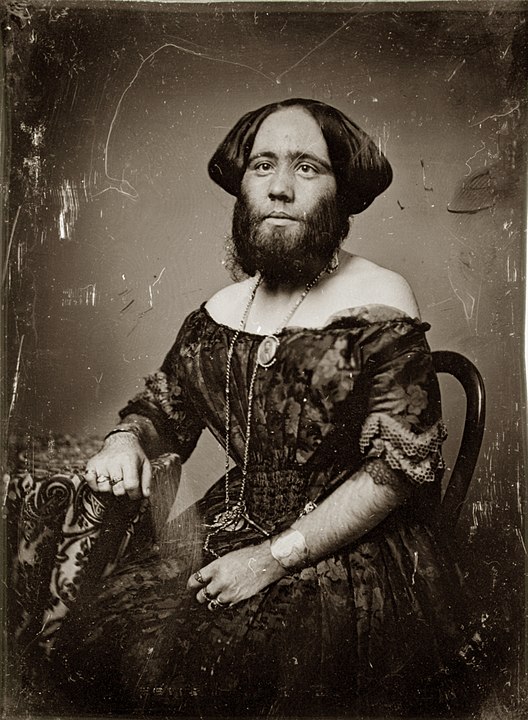
Hirsutism is much more common than CHT, affecting around 7% of women in the US. Hirsutism isn’t only facial hair growth, it refers to any excessive growth where women usually don’t grow hair, such as on the back or chest. Where CHT is a genetic condition that affects people as soon as they are born, hirsutism has variable causes. For some women, they have beards from the day they’re born, due to their faulty adrenal glands. Madame Josephine Fortune Clofullia, as an example, had a full beard by age two. For others, their adrenal glands only malfunction after a major shock to their system. Madame Baroness Sidonia de Barcsy only started sprouting whiskers after she gave birth to her son Nicu. Her tale is interesting because instead of informing her of this new development, her doctors ordered her husband to take down all of the mirrors in her house and said that no one should inform her that she had sprouted facial hair.
Hypertrichosis is essentially curable nowadays, what with laser hair removal and electrolysis, but some people with the condition still maintain and profit off of their hair. Bearded lady Vivian Wheeler, as an example, was a touring bearded lady as recently as 2010 with the Grim Bros and Hall and Christ sideshows. While this blog may cover sideshow history, it’s important to remember that people like these past performers still walk the earth, and they deserve the same respect and decency that you would give anyone else…even if you sneak a peek at them as they pass.
Today’s main sources were Healthline.com and American Sideshow by Marc Hartzman. This is one of my favorite books of all time, I highly recommend. It’s a must-have if you enjoy sideshow history.
 Prodigies! A Sideshow History Blog
I think it’s very important to shed light on the darker aspects of side shows and the early days of circusrie. I knew that many of the people featured simply had rare medical conditions, but I didn’t know about HTC or that there were still people who show it off in modern shows. thanks for sharing!
LikeLiked by 1 person
I agree that there were many significant problems with the early sideshows, but it is also important to remember that many sideshow performers were independent business people who made a significant amounts of money and had a happy life displaying themselves to the public. I think only discussing the abuse of the performers downplays their humanity and business savvy.
LikeLike
This is so interesting. This definitely helped understand our history. Do you think that the performers were happy with the choices they made in their sideshows, or do you think they were trying to make light of their situation?
LikeLike
It really depends on the owner of the sideshow and the manager of the performer. Daisy and Violet Hilton, a very famous pair of conjoined twins, suffered terribly under their parents’ management. Contrastingly, General Tom Thumb, probably the most famous little person performer, had a fantastic time working in the sideshow under PT Barnum. He was wealthy, famous, and lived in luxury.
LikeLike
I love that this post shows the backstory of people that were ridiculed and shown off as props for something they couldn’t control. I like how in-depth you go into their stories and it really makes me feel pity for them. Great post!
LikeLike
Many sideshow performers were in the business voluntarily. Chang and Eng were their own managers for a long stretch of their career. I like to think of it as making the best of a difficult situation. No one can choose the circumstances of their birth or how they look physically, but they can choose how to react to it. In their time, these performers found a way to support themselves in a world that would normally reject them.
LikeLike
This is such an interesting post! I would always assume that people with these rare disorders would feel somewhat ashamed and felt forced to perform–I’m glad you shed some light on the fact that it was usually voluntary. Really great idea for a blog!
LikeLike
Thanks! Yeah, I think it’s important to remember that sideshow performers were independent people, not creatures to feel bad for. While there was exploitation in the sideshow, there’s a misconception that it was all exploitative, which really discounts the agency of the performers.
LikeLike